The Real Alpha Is Boring
There is a pitch going around right now that is almost too clean to argue with.
A marketing agency in Austin was running a six-person operations team for $28,000 a month. Lead qualification, support, invoicing, reporting, competitor monitoring, all by hand. They replaced about 80% of it with five Claude agents. Total tool cost: $200 a month. The person who built those agents charges $2,500 a month to keep them running. Do that eight times and you have a $20,000-a-month business at 85% margins. Build once, maintain on retainer, repeat.
The math is real. The demand is real. The tools are real. I still think the lesson most people take from it is the wrong one, and the mistake is costing them the actual opportunity, which is hiding one level down. The opportunity is not in the impressive agent. It is in the boring one. And it is not in building the machine that runs it. It is in refusing to.
The pitch everyone is suddenly running
You have seen the genre even if you missed this particular post. Liam Ottley, Nick Saraev, a thousand smaller accounts: start an AI automation agency, wire up n8n and the Claude API, film a two-minute Loom of a contact form turning into a CRM update and a Slack ping, sell it to small businesses on a monthly retainer. On paper it is a beautiful business. Build a thing once, charge to maintain it, stack clients.
It is seductive for exactly one reason: the demo is easy now. The barrier to a working agent has collapsed the same way the barrier to a working app did. Which means the demo is no longer the thing that separates a business from a hobby.
The demo is the easy part
What separates them is everything that happens after the Loom.
Gartner expects more than 40% of agentic AI projects to be cancelled by the end of 2027, citing cost, unclear value, and weak controls. The most honest account I have read of the agency model from the inside is Nadia Privalikhina's, who actually built one and walked away. Her numbers are brutal: half her prospects had budgets under $2,000, a $500 build ate a week, her effective hourly rate landed under $10. But the deeper problem was not pricing. It was that automations rot. An API "silently introduced a new status" and a flow broke. The same prompt returned different output on different days. Her line for it belongs on the wall of this entire category: "100x a broken process and you get 100x the mess."
The retainer in the Austin pitch is not a feature. It is the tell. You are not being paid to build. You are being paid to stand between a fragile system and the client who will notice the second it breaks. And the more impressive the agent, the more surface area it has to break on.
What survives contact with production is boring
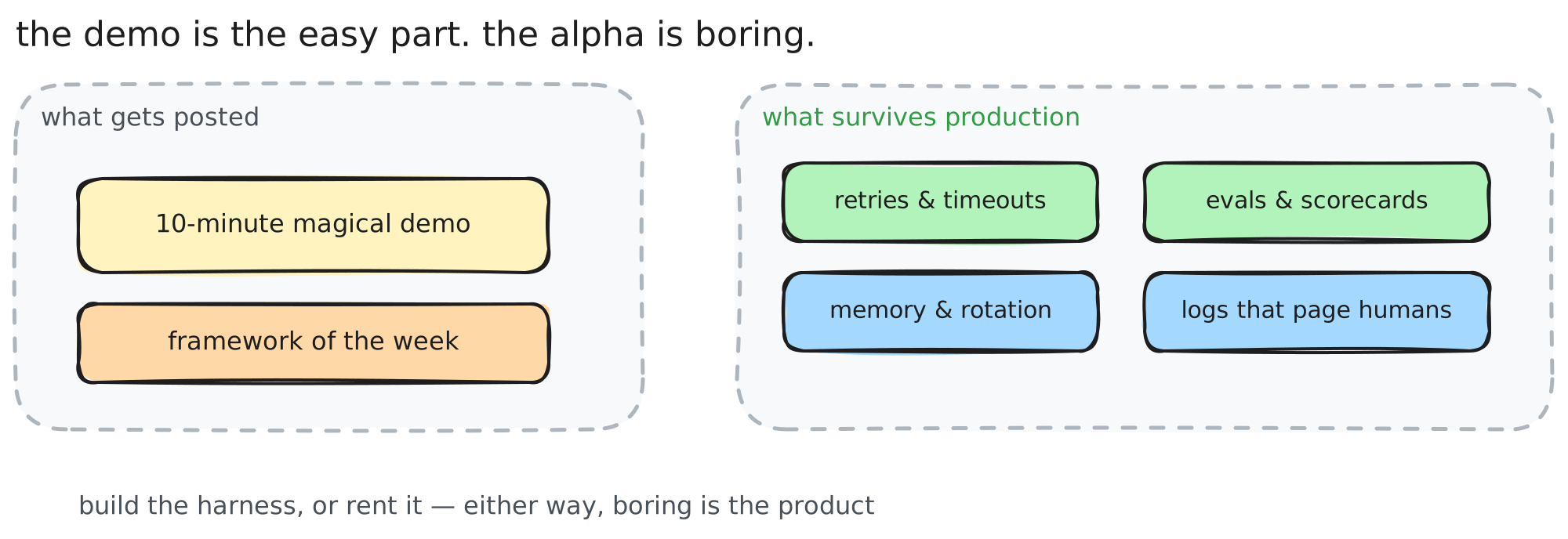
Here is the part the Loom never shows. The agents still running in month six are not the dazzling ones. They are invoicing. Reconciliation. Ticket triage. Lead routing. Renewal reminders. Status syncs between two systems that should have been talking a decade ago. Narrow, repeatable, almost aggressively unglamorous.
This is not an accident, it is the pattern. Stanford's business school notes that AI is reshaping accounting by doing the "boring" stuff first, the data entry and the reconciliation, precisely because those tasks are routine. The vertical-agent crowd has a phrase for why narrow wins: specialists trade range for trust. And the market agrees. Garry Tan, reading fresh Anthropic usage data, points out that coding is roughly half of all agent activity while the actual verticals, hospitals and law firms and logistics and the back office of every small business, sit under 5% adoption. His framing: "300 SaaS unicorns came before. 300 vertical AI unicorns are coming next."
Boring is not the consolation prize you accept when you cannot build the cool thing. Boring is the moat. Nobody films a Loom about an accounts-receivable agent, which is exactly why it is still running, and still billing $2,500 a month, long after the impressive demo got quietly switched off.
Why boring works
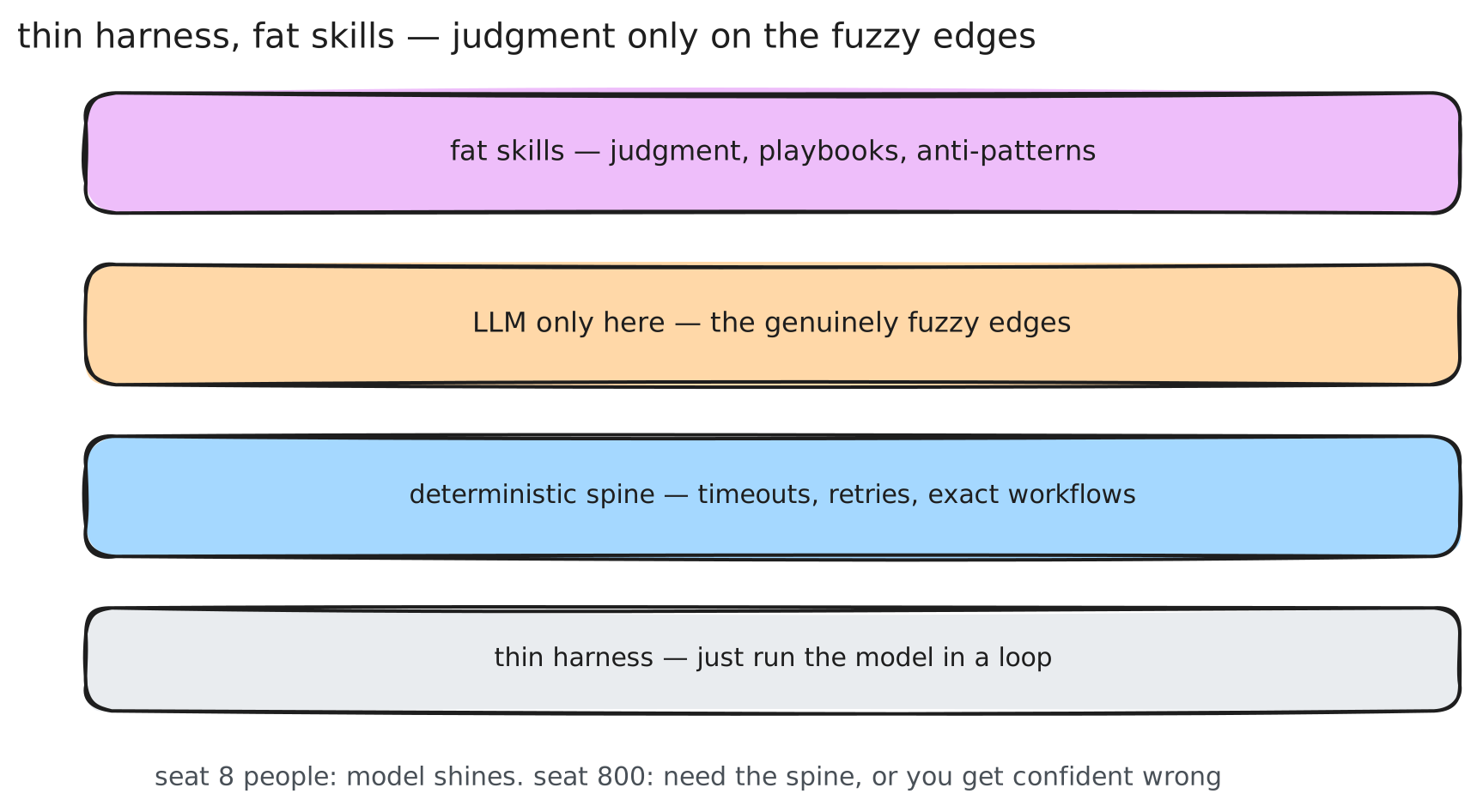
There is a real mechanism behind why the boring agent survives and the flashy one does not, and it is the most useful idea in agent design right now. Steve Yegge and Garry Tan call it thin harness, fat skills: push intelligence up into skills, push execution down into deterministic tooling, and keep the harness, the part that just runs the model in a loop, thin.
The flashy agent fails because it puts judgment where determinism belongs. A model can seat eight people at a dinner table beautifully, accounting for who cannot sit next to whom. Ask it to seat 800 and it returns a plausible, confident, completely wrong chart. A boring agent has been ruthless about that line: the language model only touches the genuinely fuzzy edges, and a deterministic spine handles everything that has to be right every single time.
Which is just another way of saying reliability is the product. Foundation Capital sizes the prize here at $4.6 trillion, the money businesses spend on labor and services rather than on software, and the one line that matters from their whole thesis is this: "Buyers don't purchase software; they purchase the outcomes it delivers." A small business owner is not buying an agent. They are buying an invoice that goes out on its own, every time, whether or not anyone remembers it exists. Boring is simply what a dependable outcome looks like from the inside.
The real fork: build the harness, or rent it
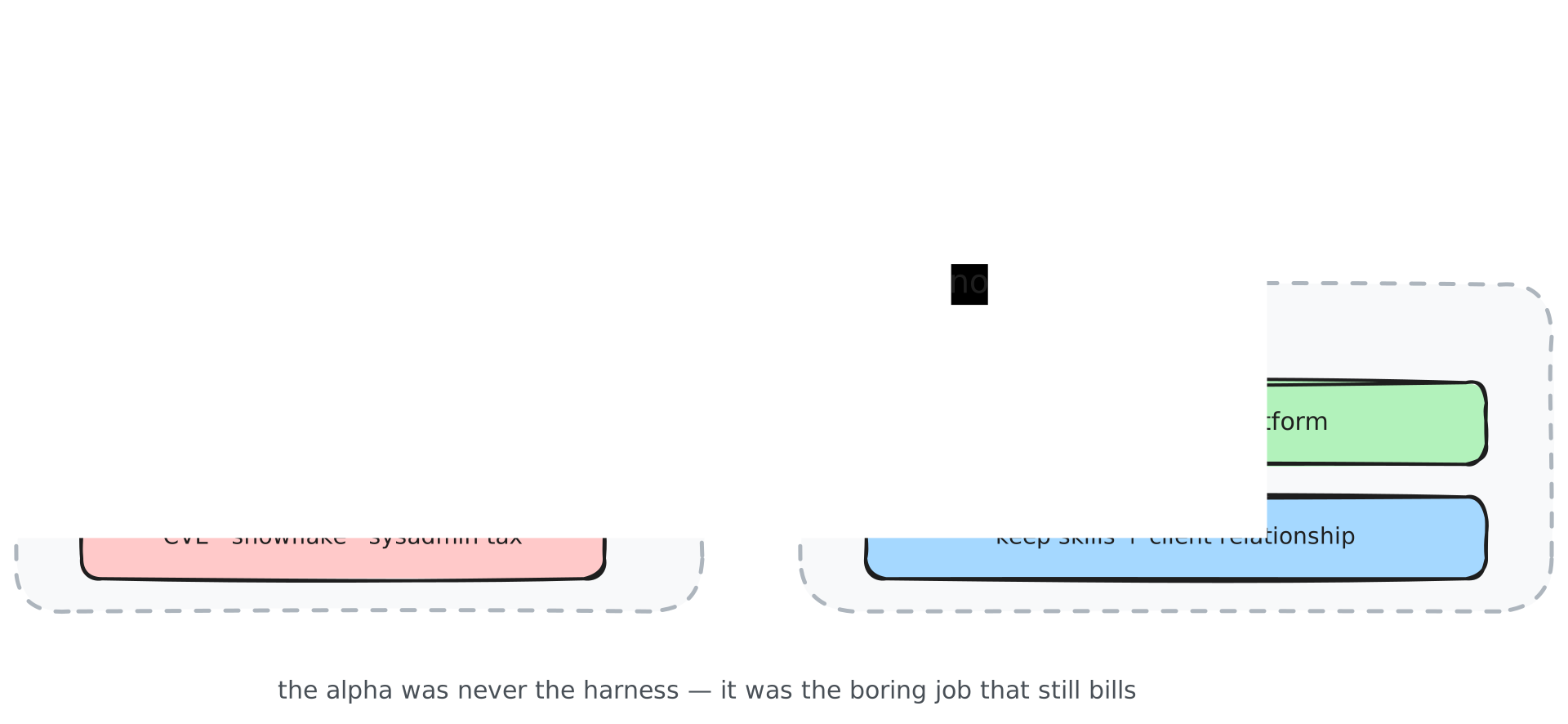
So say you believe all of that and you are going to go build boring, reliable agents for businesses. There is still one decision that determines whether you have a business or a second job, and the pitch skips right past it: do you build the machine that runs your agents, or do you rent it?
The build-it path is genuinely tempting, because the tools are now spectacular. OpenClaw, Peter Steinberger's self-hosted harness, is MIT-licensed, runs an always-on agent across every channel you use, schedules work with cron, and learns new tricks through plain-markdown skill files. Hermes Agent from Nous Research is in the same class: persistent memory, model-agnostic, happy to run on open weights so no tokens ever leave the client's box. Full control, full data sovereignty, no platform lock-in. For an engineer, it is catnip.
The catch is that you become the thing you maintain. OpenClaw's first months are instructive: a security write-up catalogues a critical remote-code-execution flaw, six figures of instances left exposed on the open internet, and an audit finding that roughly an eighth of the community skills in its registry were outright malicious. No security team, no bug bounty, because it is a brilliant open-source project and not a vendor. Hermes asks you to run the model serving, the vector database, and the tool wiring yourself. Multiply either across a roster of clients and every one becomes a snowflake server you are patching at 2am. You set out to sell automation and quietly bought yourself a sysadmin job. That "50 hours a month of maintenance" in the roadmap only ever goes up.
The build-versus-buy literature is close to unanimous here: for something like 90% of use cases you should buy or assemble, and hand-roll your own only when the harness itself is your core, defensible IP. The person automating a dentist's invoicing has no core IP in their control plane. They are lovingly rebuilding a thing that someone else already hosts, sandboxes, and patches for a living.
That is the rent-it path. Managed agent platforms, Duet among them, take the boring infrastructure off your plate entirely: hosting, integrations, scheduling, guardrails, single-tenant isolation, the patching. You bring the business logic and the client relationship, not the plumbing. Duet's own framing of the difference is the sharpest version I have seen: "the fanciest agent builder in the world loses if your team forgets to open it." Its whole bet is build-and-run, it does not hand you a workflow and walk away, it hosts the work and reruns it on a schedule, inside the inbox and the Slack channel and the CRM where the work already lives.
(Disclosure: I work on Duet, so discount the brand name as much as you like. The argument does not need it. Swap in any managed platform you trust and it holds.)
The alpha was never the harness
Put it together and the conclusion is almost rude in how it deflates the original pitch.
The harness is a commodity. Anthropic accidentally shipped the entire source of Claude Code to npm this spring, half a million lines, and the world kept turning, because the control plane was never the secret. The model is not the secret either. The 2x people and the 100x people are using the same models.
What is left, the part that is actually yours and actually compounds, is two things. The skills, the encoded judgment of how one specific boring process should run, the fat-skills layer that gets a little better every time you do the manual version once and codify it. And the relationship, the client who trusts you to own an outcome. Neither of those commoditizes. Your hand-rolled harness does, the day it gets a CVE.
The Austin pitch is right that the math works. It is just pointing at the wrong number. The leverage was never the $200 of tools or the eighth client. It was choosing the process nobody wants to demo, and then refusing to rebuild the plumbing underneath it for every client you sign.
Build for the demo and you get a great Loom and a churn problem. Build for Tuesday morning, the reconciliation that has to run whether or not anyone is watching, and you get a business.
The exciting agent gets the screenshot. The boring one gets renewed.